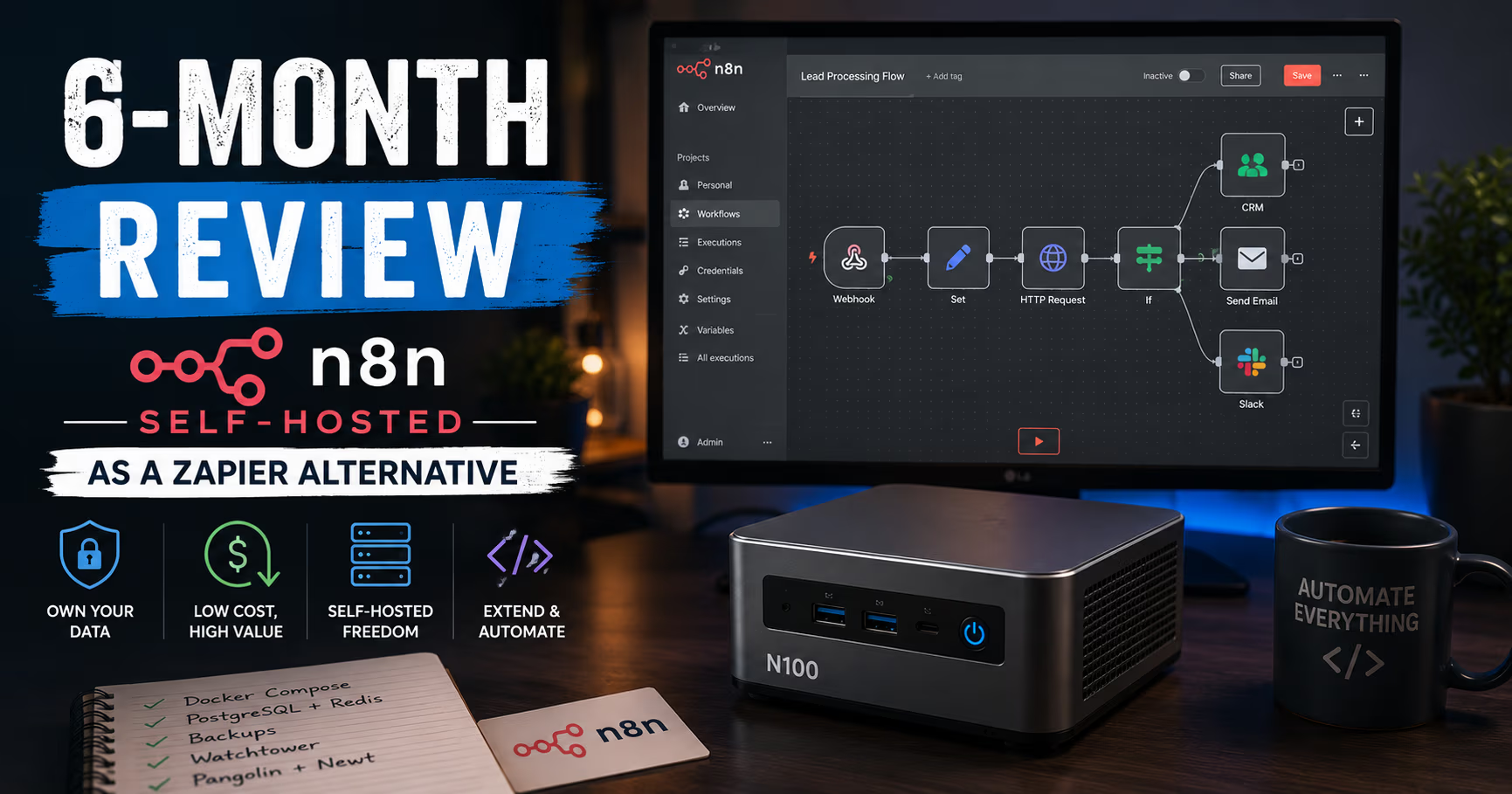
Hey everyone. If you've been following along, you know I've been deep in the self-hosted rabbit hole for a while now—Docker Compose stacks, home lab gear, and trying to claw back control (and cash) from SaaS tools that keep raising prices. A few months back I finally pulled the trigger and replaced most of my Zapier usage with a self-hosted n8n instance running on a small local N100 mini PC. Six months and a few thousand executions later, here's the unfiltered reality.
Why I Made the Switch
I was on Zapier's Starter/Professional tier, burning through tasks pretty quickly with a mix of notification workflows, data syncs between tools, lead processing, and some internal admin stuff. The bill was creeping up toward $100–150/month in bad months, and I didn't love the idea of all that data (some of it mildly sensitive) flowing through someone else's servers. Plus, the more complex my Zaps got, the more tasks they ate.
n8n looked promising: open-source core (fair-code), full self-hosting, Code nodes for when the visual editor isn't enough, and no per-step billing nonsense. I spun it up on a local N100 mini PC and never looked back… mostly.
The Setup (What Actually Worked)
- Hardware: Local Beelink/GEEKOM-style N100 mini PC (low power, fanless options available) running Docker Compose + PostgreSQL backend. Added Redis for queue mode once I scaled up.
- Networking / Reverse Proxy: Newt running on the N100 for local services + Pangolin on a cheap external VPS (~€3-5/mo) with static IP for reliable external access and always-online webhook reception. Zero ports open directly on my home network.
- Backups: Daily automated backups (pg_dump + volumes) sent to a different machine on the local network. Simple, reliable, and has already saved me once.
- Updates: I update automatically containers via Watchtower (can rollback easily using backups). The stack is stable enough that downtime is usually just a 2–3 minute restart.
Total ongoing cost: ~€8–12/month (mini PC electricity + small external VPS). Could go to nearly €0 if you run everything locally with dynamic DNS / Tailscale / etc., but the tiny VPS makes webhooks rock-solid.
What's Been Great After Six Months
Cost savings are real. Even with moderate usage, I'm saving hundreds per year. At higher volumes this gap becomes ridiculous. No "oh we executed 12 nodes so that's 12 tasks" surprises.
Flexibility is on another level. The Code node (JavaScript) and HTTP Request node let me handle edge cases that would require awkward workarounds or premium Zapier features. Error handling is vastly superior — you can build proper retry logic, fallback branches, and notifications that actually make sense.
Data stays where I want it. For anything involving customer info or internal tools, this is huge. No more wondering what Zapier's doing with the payloads.
Performance. The N100 handles everything I throw at it without breaking a sweat. Concurrent executions aren't an issue for my use case.
Community nodes and extensibility. When a native integration is missing, it's usually quick to build something custom or use a community node.
The Rough Edges (Honest Complaints)
It's not all sunshine. Here's where it hurt:
- Maintenance tax. This is the big one for self-hosting anything. Updates, occasional queue/backlog issues, monitoring uptime, and making sure backups actually restore. It's not bad, but it's on you. One late-night webhook failure taught me to add better alerting.
- Fewer polished integrations. Zapier's 7k+ app library is hard to beat for obscure tools. With n8n I use more generic HTTP/API calls. It works, but it takes longer to set up initially, though you may prefer community nodes.
- UI/UX polish. n8n's editor is good and has improved, but it's still not as buttery smooth as Zapier for quick tweaks. Canvas can get messy on complex workflows.
- Debugging can be painful. When something breaks at 2am, the logs are detailed… but you have to know where to look.
(Learning curve wasn't really an issue for me personally, but it can be steep if you're coming straight from Zapier's "it just works" experience and aren't comfortable with Docker/JSON/data structures.)
Real-World Usage After Six Months
I've got about 15–20 active workflows now. Things like:
- Processing form submissions → CRM + email + Slack
- Daily/weekly data syncs and reports
- Personal stuff (RSS → Notion, monitoring alerts, etc.)
- Some AI-adjacent flows using local models via Ollama nodes
Uptime has been excellent once I got queue mode and proper error workflows dialed in. Everything runs in Docker Compose (no need for Kubernetes in my home lab).
Who Should Switch to Self-Hosted n8n?
Yes, if:
- You're technical/comfortable with Docker and basic server management
- You run more than a handful of moderately complex automations
- Data privacy or cost at scale matters to you
- You like owning your tools and being able to extend them
Stick with Zapier (or similar) if:
- Your team is non-technical
- You need rock-solid support and the absolute easiest setup
- You rely on very specific niche integrations
- You hate any kind of infrastructure responsibility
Final Verdict
Six months in, I'm happy with the move. Self-hosted n8n on the N100 with Pangolin/Newt isn't "set and forget" like Zapier wants to be, but it's powerful, cheap, and gives me way more control. The maintenance overhead is real but manageable if you treat it like any other important self-hosted service (good backups, monitoring, occasional care).
Would I recommend it? For the right person — absolutely. It's one of those tools that rewards investment in learning it.
If you're on the fence, start small: migrate one or two non-critical workflows and see how it feels. The n8n community is helpful, and the docs have come a long way.
What about you — still on Zapier/Make, or already self-hosting? Drop your experiences in the comments. I might do a follow-up with specific workflow examples or my Docker Compose template if there's interest.
Until next time, keep your systems thoughtful.
No comments yet